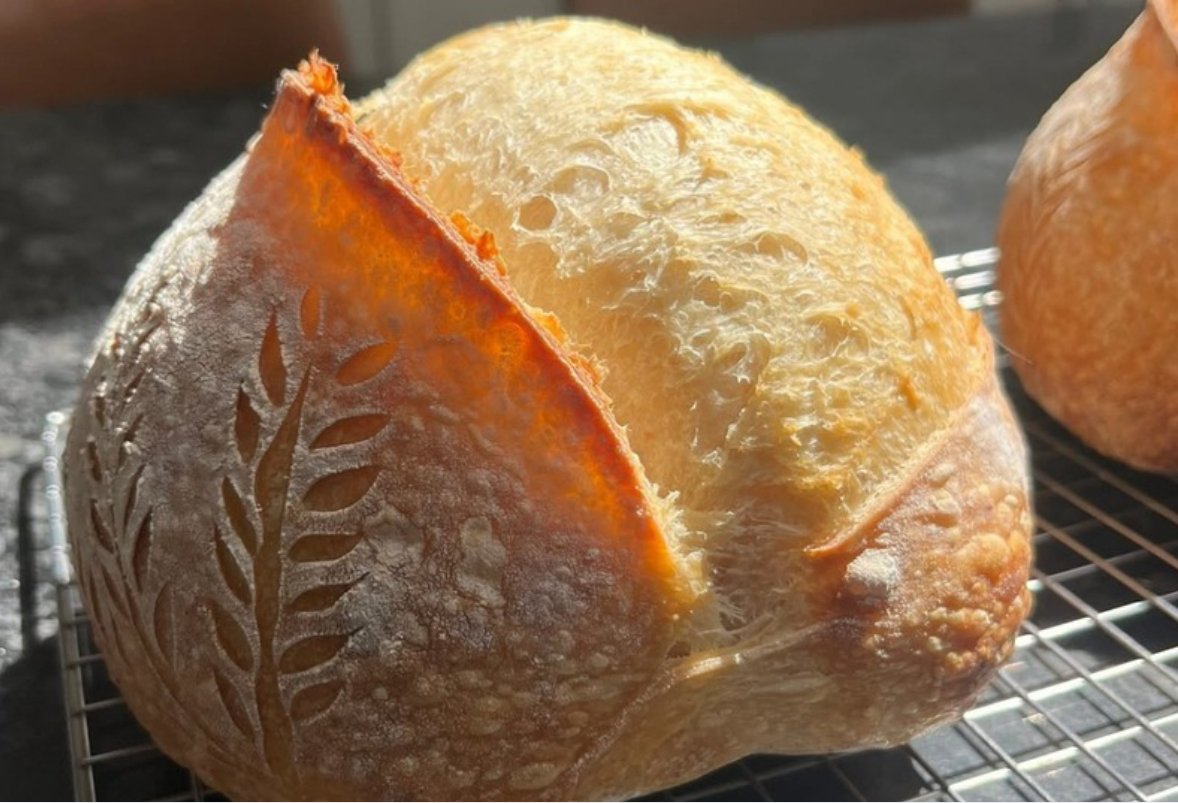
The Origins of Artisan Bread and Its Ingredients
Bread baking has been a cornerstone of human cuisine for thousands of years, with roots tracing back to ancient Egypt. The beauty of artisan bread comes from its simple ingredients—flour, water, yeast, and salt—and the technique used to bring them to life. High-quality flour provides gluten, which gives the bread structure and elasticity, allowing it to rise and trap gases. Yeast acts as a natural leavening agent, converting sugars in the dough into carbon dioxide, which creates the airy texture inside the loaf. Salt not only enhances flavor but also strengthens the gluten network, ensuring a chewy yet tender crumb. Water activates the yeast and helps blend the ingredients. When these elements work together, the dough transforms into a soft, pliable mixture that can expand dramatically during baking, creating those sought-after big bellies in same-day loaves.
ADVERTISEMENT
How Same-Day Baking Produces Big Loaves
Same-day bread baking, also called “quick proofing,” involves shorter fermentation periods compared to overnight cold-proof methods. This method produces loaves with more dramatic expansion because the dough has more active yeast ready to release carbon dioxide quickly during baking. While cold-proofed dough develops more complex flavors over time, same-day dough produces a lighter, more immediate rise with impressive oven spring. The underproofing sometimes contributes to larger bellies as the dough is still pushing to expand when it hits the oven’s heat. This rapid expansion can also affect the crumb structure, often resulting in an irregular but rustic pattern that is visually appealing and soft to bite. The technique highlights the power of yeast and gluten and demonstrates how small adjustments in time, temperature, and hydration can dramatically impact the final loaf.
Tips for Perfect Crumb and Flavor in Quick Loaves
Achieving a perfect crumb and flavor in same-day bread requires attention to detail. First, ensure your flour has sufficient protein content (ideally bread flour) to support strong gluten development. Hydrate your dough adequately, but don’t make it too sticky; a 65–70% hydration works well for same-day loaves. Proper kneading or folding techniques help develop strength while keeping the dough airy. Additionally, shaping your dough into tight, smooth rounds ensures a uniform rise. For flavor, even quick methods benefit from slight resting periods between kneading and shaping. Scoring the dough before baking allows controlled expansion and prevents chaotic splits. Finally, using steam in the oven for the first 10–15 minutes creates a crispy, golden crust while supporting dramatic belly expansion. With these methods, your same-day bread can rival artisan loaves in both flavor and appearance.
Ingredients
- 4 cups bread flour
- 1 ½ cups warm water
- 2 teaspoons salt
- 2 teaspoons sugar
- 2 teaspoons active dry yeast
Instructions
Step 1: Prepare the Dough
In a large bowl, combine warm water, sugar, and yeast. Let sit 5–10 minutes until foamy. Add flour and salt, and mix until a rough dough forms.
Step 2: Knead and Rest
Knead the dough for 8–10 minutes on a floured surface until smooth and elastic. Let it rest in a lightly oiled bowl, covered, for 1–2 hours until doubled in size.
Step 3: Shape the Loaves
Gently punch down the dough and shape into round or oval loaves. Place on a parchment-lined baking sheet. Allow to rest 20–30 minutes for a final quick proof.
Step 4: Score and Bake
Preheat the oven to 450°F (230°C). Score the top of each loaf and bake with steam (a pan of hot water in the oven) for 30–35 minutes until golden brown and hollow-sounding when tapped.
Step 5: Cool and Serve
Remove from oven and let cool completely on a wire rack before slicing to preserve the crumb.
Timing & Nutrition
- Prep Time: 20 minutes
- Proofing Time: 1.5–2.5 hours
- Bake Time: 30–35 minutes
- Total Time: 2–3 hours
- Nutrition (per slice, approx.): 150 kcal, 5g protein, 1g fat, 28g carbs
Q1: Can I make this bread without yeast?
A: Traditional same-day bread relies on yeast for dramatic rise. Without yeast, use baking powder or soda for quick breads, but the texture will differ.
Q2: Why does my loaf collapse sometimes?
A: Collapse often occurs from overproofing or underdeveloped gluten. Ensure proper kneading and timing to avoid deflation.
Q3: Can I freeze same-day bread?
A: Yes, fully cooled loaves can be wrapped tightly and frozen up to 3 months. Thaw at room temperature before slicing.
Q4: How do I get a crispy crust?
A: Steam in the oven during the first 10–15 minutes and bake at high temperature.