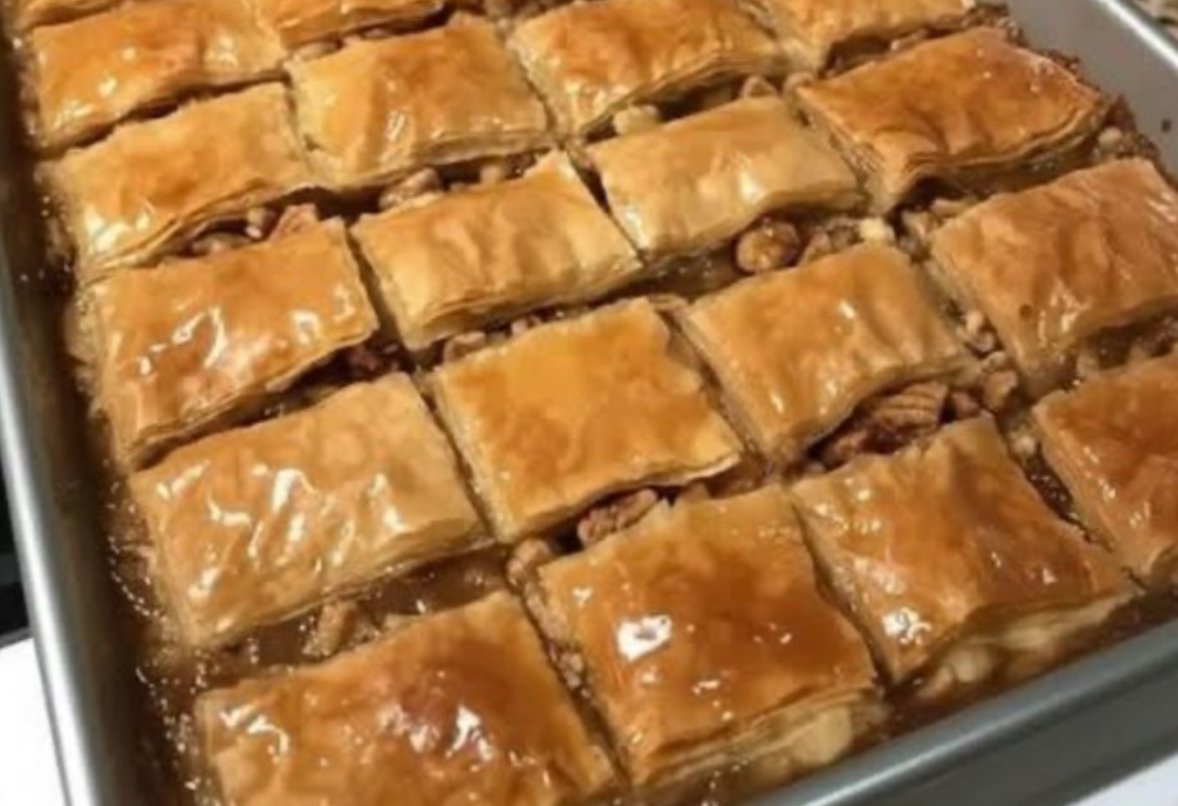
The History of Baklava: A Timeless Dessert
Baklava is one of the most famous desserts in the world, celebrated in Middle Eastern, Turkish, and Greek cuisines. Its origin dates back to the Ottoman Empire, where it was prepared for sultans and guests during special occasions. Over time, each country developed its own version, but the essence of Baklava remains the same—layers of phyllo dough, nuts, and sweet syrup. The thin, buttery phyllo sheets bake into crispy layers, while the nut filling provides crunch and richness. Today, Baklava is a dessert you’ll find at weddings, religious holidays, and family gatherings, symbolizing hospitality and joy.
ADVERTISEMENT
Why Walnuts, Pecans, and Honey Make Baklava Irresistible
Baklava is loved not only for its texture but also for its nut and syrup combination. Walnuts bring earthy depth, pecans add a buttery crunch, and honey ties it all together with natural sweetness. Cinnamon gives the filling a warm, spiced note, while a touch of lemon zest brightens the syrup, keeping the dessert from being too heavy. Honey also acts as a natural preservative, meaning your Baklava stays fresh for days. These ingredients work in harmony, creating the perfect balance between crisp, sweet, and nutty.
Why Families Love Making Baklava at Home
While store-bought Baklava is convenient, homemade versions are unmatched. Making Baklava at home allows you to control the flavors—extra nuts for crunch, more honey for sweetness, or even a mix of pistachios for variety. Families often prepare Baklava together, making it a fun and memorable kitchen activity. The process of layering phyllo dough, brushing with butter, and sprinkling nuts feels almost therapeutic. When baked, the result is a golden, fragrant dessert that fills the home with irresistible aromas. Served with tea or coffee, homemade Baklava is a tradition that brings people closer.
Ingredients
- 1 pack (1 pound) phyllo dough
- 2 tablespoons ground cinnamon
- 2 cups chopped walnuts
- 2 cups chopped pecans
- 2 cups honey
- 1 ½ cups melted butter
- 1 teaspoon vanilla essence
- 1 teaspoon grated lemon zest
Instructions
Step 1: Prepare the Nut Mixture
In a bowl, mix walnuts, pecans, and cinnamon. Set aside.
Step 2: Prepare the Baking Dish
Lightly butter a baking dish to keep the dough from sticking.
Step 3: Layer the Phyllo Dough
Place 2 phyllo sheets at the bottom and brush with melted butter. Continue layering, adding 2 tablespoons of the nut mixture between every two sheets. Brush with butter each time.
Step 4: Finish the Top Layer
Brush the top layer generously with butter for a crisp, flaky finish.
Step 5: Cut the Baklava
Using a sharp knife, cut the unbaked Baklava into diamond shapes.
Step 6: Bake
Preheat the oven to 250°F (120°C). Bake for 45–47 minutes, until the top is golden brown.
Step 7: Prepare and Add the Syrup
While baking, heat honey, vanilla essence, and lemon zest in a saucepan until combined. Pour over the hot Baklava as soon as it comes out of the oven. Let rest for 10 minutes before serving.
Timing and Nutrition
- Prep Time: 25 minutes
- Cook Time: 45–47 minutes
- Total Time: 1 hour 15 minutes
- Servings: 12
Nutrition (per serving):
- Calories: 420
- Carbohydrates: 48g
- Protein: 6g
- Fat: 22g
- Fiber: 3g
- Sugar: 32g
1. What country is Baklava originally from?
Baklava originated in the Ottoman Empire, with strong influences from Turkish, Greek, and Middle Eastern cuisines.
2. Can I make Baklava ahead of time?
Yes, Baklava tastes even better the next day as the syrup fully soaks into the layers.
3. Should Baklava be refrigerated?
No, keep it at room temperature in an airtight container. Refrigeration makes it soggy.
4. Can I freeze Baklava?
Yes, you can freeze baked Baklava for up to 3 months. Thaw at room temperature before serving.
5. Why is my Baklava not crispy?
This happens if too much syrup is added or if it’s stored in the fridge. Use just enough syrup and store at room temperature.