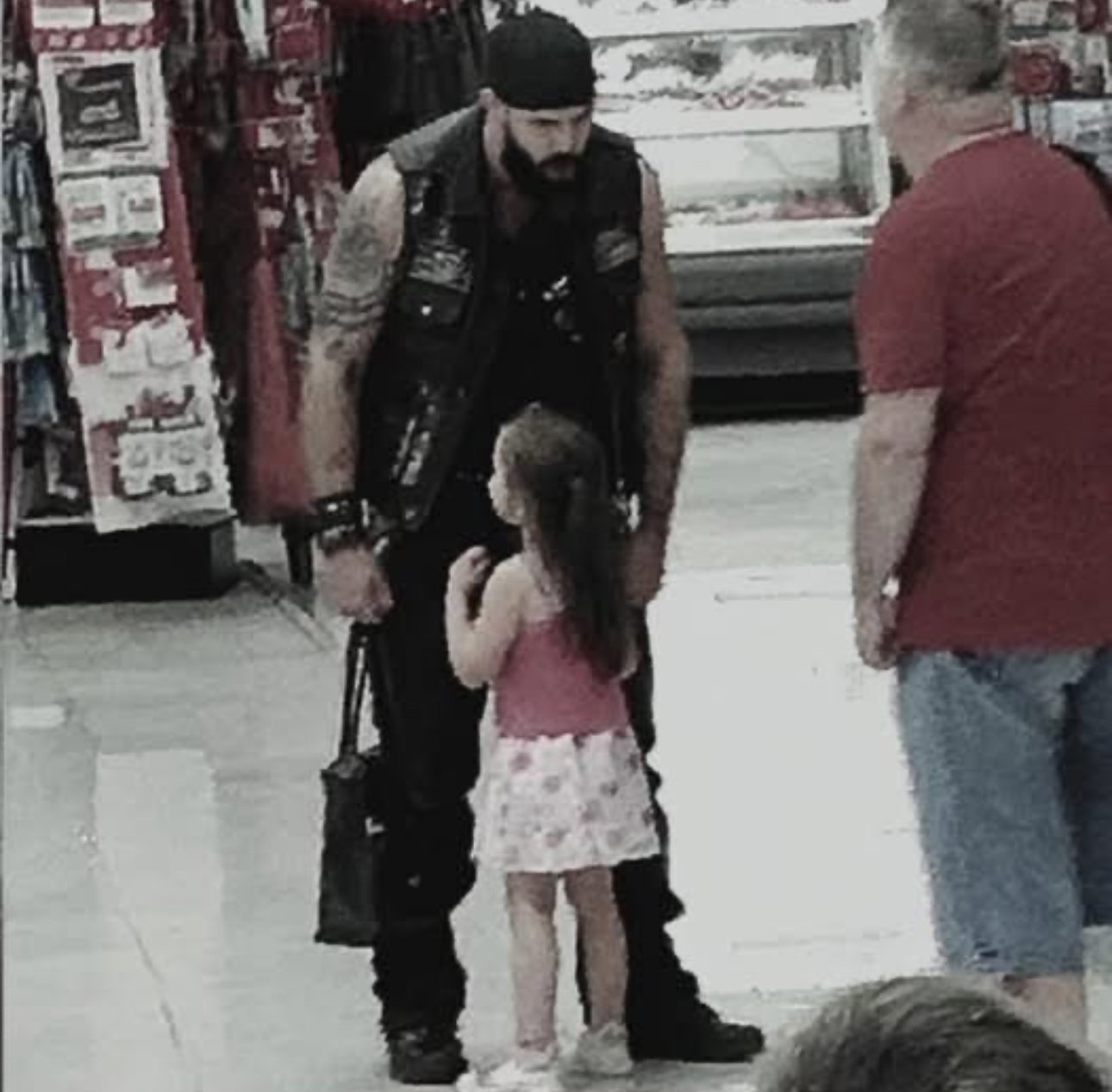
An Unforgettable Scene at Walmart
What began as an ordinary shopping trip turned into a moment no one would ever forget. In the middle of a Walmart aisle, a small, frightened six-year-old girl sprinted toward a towering biker in a leather vest marked Demons MC. She was mute, trembling, and frantically signing. To everyone’s shock, the biker knelt down and signed back with fluency and gentleness. The girl clung to him like a lifeline, her tears flowing as her hands flew faster. Within moments, the biker’s expression shifted from concern to fury. His voice thundered across the store:
ADVERTISEMENT
“Who brought this child here? WHERE ARE HER PARENTS?”
The Truth Behind the Vest
The child’s name was Lucy, a deaf girl kidnapped from her school in Portland just three days earlier. Her captors planned to sell her for $50,000 in the parking lot that very day. What saved her was recognition: Lucy had seen the biker’s patch—a small purple hand, a symbol in the deaf community marking a “safe person.” She remembered his face from sign language educational videos at school. His name was Daniel, a biker who had been teaching sign language for over fifteen years. To onlookers, his tattoos and vest screamed danger. To Lucy, he was salvation.
Daniel ordered: “Call 911. We have a kidnapped child here.” Within minutes, his biker brothers surrounded Lucy, forming a protective wall. When the kidnappers tried to lure her back, their lies crumbled as evidence exposed them. Police arrived, arrests were made, and Lucy was safely reunited with her parents.
From Fear to Family
But the story didn’t end there. Weeks later, the Demons MC returned to Walmart—not for confrontation, but celebration. Lucy was welcomed as family, rolling in with twenty bikers at her side. She proudly wore a custom purple vest that read “Honorary Demon”. Every member had since learned sign language, determined no child in their community would feel voiceless again.
What started as a terrifying ordeal transformed into a symbol of hope. A mute child found her voice in silence, a misunderstood biker gang became unlikely heroes, and shoppers witnessed compassion shatter stereotypes. That day reminded the world that heroes don’t always wear suits or uniforms—sometimes they wear leather, ride motorcycles, and speak with their hands.
Q1: Is the story of Lucy and the biker true?
Stories like this circulate widely online. While details vary, it reflects real efforts by biker groups who protect children and support vulnerable communities.
Q2: What does the purple hand patch mean?
It’s a symbol recognized in the deaf community, signifying a safe person who can communicate in sign language and offer help.
Q3: Why do bikers get involved in child protection?
Many motorcycle clubs support causes like anti-bullying, child safety, and advocacy for vulnerable groups—challenging stereotypes about bikers.
Q4: What’s the takeaway from this story?
Never judge a book by its cover. True strength comes from compassion, and heroes can be found in the most unexpected places.