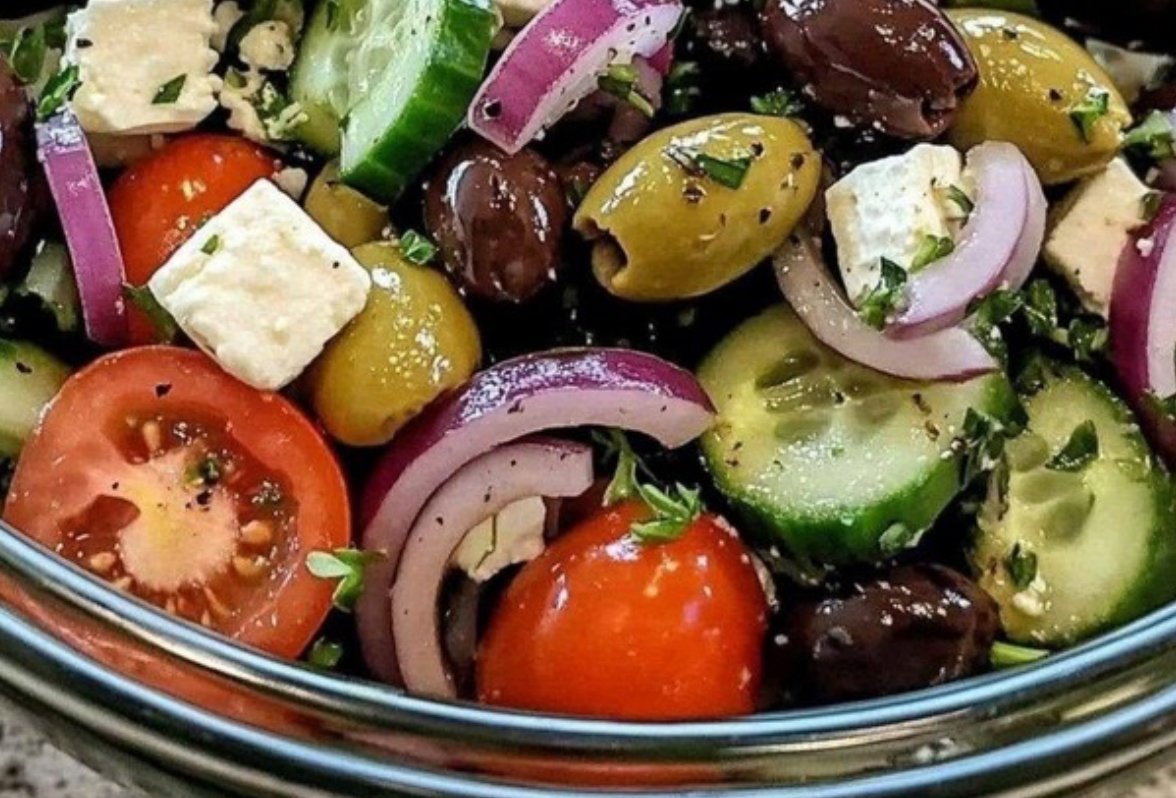
History and Health Benefits of Greek Salad
ADVERTISEMENT
Greek salad, or Horiatiki, originated in Greece as a simple village salad combining fresh, local vegetables, olive oil, and feta cheese. Traditionally, it reflects the Mediterranean diet, which is known for supporting heart health, longevity, and weight management. Cucumbers are hydrating and rich in antioxidants, while tomatoes provide vitamins C and K. Red onions and olives deliver fiber and healthy fats, and feta cheese adds protein and calcium. Together, these ingredients create a nutrient-dense dish that’s both light and satisfying.
Why These Ingredients Work Together
Each ingredient in Greek salad has a purpose. Cucumbers provide a crisp texture, balancing the creamy feta. Tomatoes give a juicy sweetness that contrasts with the saltiness of olives. Red onion adds a subtle sharpness, and fresh parsley brings a fragrant herbaceous note. Olive oil ties everything together while red wine vinegar adds tangy brightness. This combination of textures and flavors makes Greek salad both refreshing and versatile. You can even customize it with extra veggies, fresh herbs, or a protein like grilled chicken for a complete meal.
Tips for Perfect Greek Salad Every Time
To make the best Greek salad, always use fresh, high-quality ingredients. Slice the vegetables uniformly for even flavor distribution, and add the feta cheese just before serving to maintain its texture. Use extra virgin olive oil for a rich, fruity taste, and balance the acidity with a dash of red wine vinegar or lemon juice. Let the salad sit for a few minutes before serving to allow the flavors to meld. Pair it with warm pita, grilled meats, or enjoy it on its own for a refreshing, light dish.
Ingredients
- 2 cups cucumber, sliced
- 1 cup cherry tomatoes, halved
- 1/2 red onion, sliced
- 1/4 cup Kalamata olives
- 1/4 cup green olives
- 1/2 cup feta cheese, cubed
- 1 tbsp fresh parsley, chopped
- 1/4 tsp dried oregano
- Salt & pepper, to taste
- 2 tbsp olive oil
- 1 tbsp red wine vinegar
Instructions
Step 1: Prep the Vegetables
- Slice the cucumbers and red onion.
- Halve the cherry tomatoes.
- Cube the feta cheese.
Step 2: Assemble the Salad
- In a large bowl, combine cucumber, cherry tomatoes, red onion, Kalamata olives, and green olives.
- Gently fold in the cubed feta cheese.
Step 3: Season and Dress
- Sprinkle the salad with dried oregano, chopped parsley, salt, and pepper.
- Drizzle olive oil and red wine vinegar over the top.
- Toss gently to combine.
Tip: For the best flavor, let the salad sit for 10–15 minutes before serving to allow the dressing to soak into the vegetables.
Timing & Nutrition
- Prep Time: 10 minutes
- Total Time: 10 minutes
- Servings: 4
Nutrition per serving:
- Calories: 150 kcal
- Protein: 4g
- Fat: 12g
- Carbohydrates: 8g
- Fiber: 2g
- Sodium: 180mg
Greek Salad
Q1: Can I make this salad ahead of time?
Yes, you can prep the vegetables a few hours in advance and store them separately. Add feta and dressing just before serving to keep everything fresh and crisp.
Q2: Can I add protein to make it a main dish?
Yes! Grilled chicken, shrimp, or chickpeas turn this salad into a complete meal. Adding protein balances the dish nutritionally while keeping it light and flavorful.
Q3: Can I use a different type of cheese?
Feta is traditional, but goat cheese or halloumi work well too. Shredded Parmesan is another option if feta isn’t available.
Q4: Can I substitute the red wine vinegar?
Lemon juice, apple cider vinegar, or white wine vinegar are great alternatives. Start with half the amount and adjust to taste.
Q5: How long will it keep in the fridge?
Greek salad is best fresh but can be stored 1–2 days in an airtight container. Keep dressing separate until serving to prevent sogginess.